03 - Approach
We would rather show you how we think than how we build.
Anyone can describe a building. What matters is the reasoning that precedes it, the questions asked before the first line is drawn.
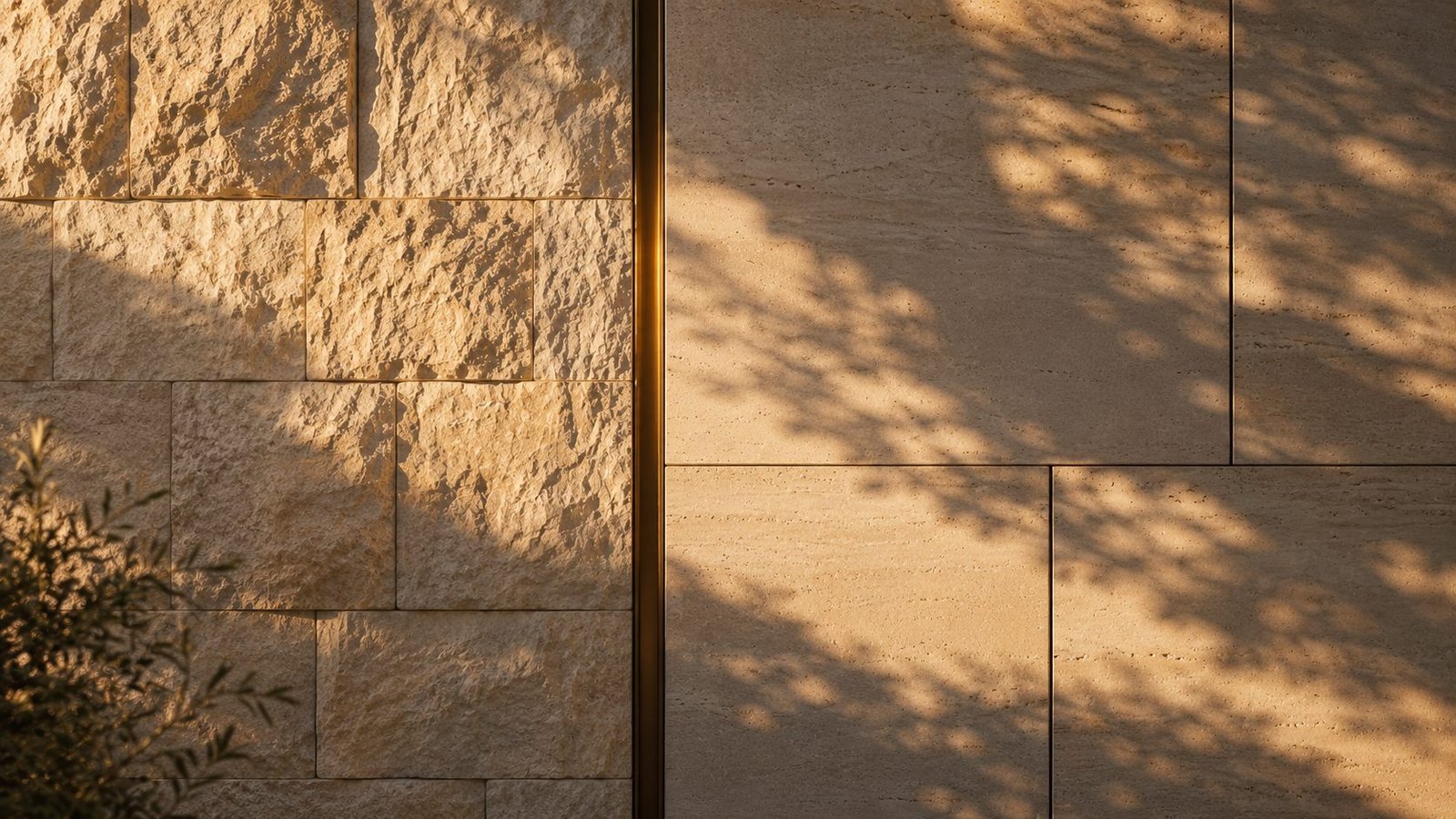
We choose materials the years are kind to, and let time finish the work.
Hand-laid limestone, warming as the light moves across it.
The Method
Four disciplines, in order.
They are sequential for a reason. Skip the first, and the rest lose their meaning.
Listen to the land
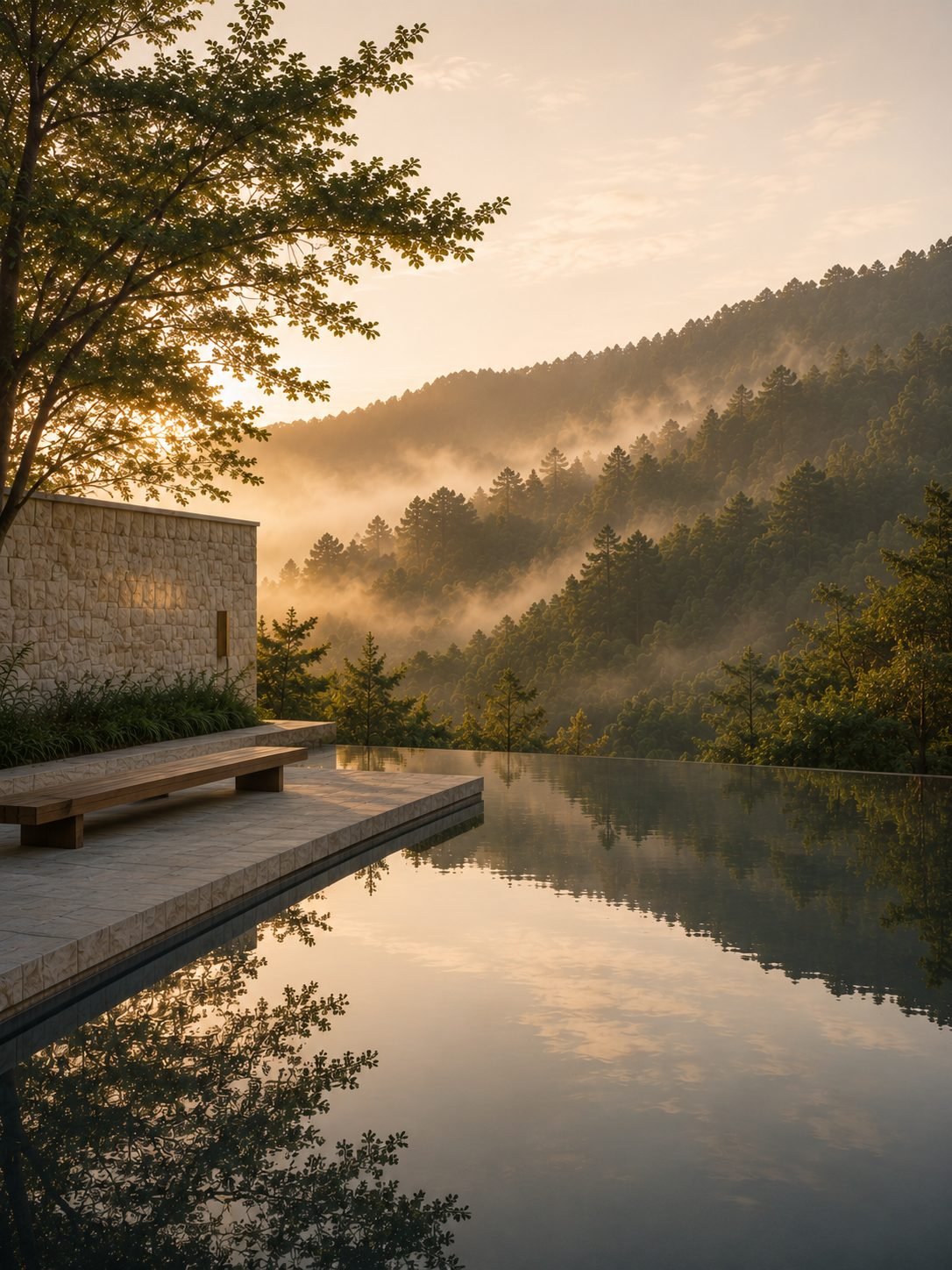
Before we design, we observe. Where the water runs, where the light falls, which trees have earned their place. Every site carries a logic older than any brief. The plan should feel discovered, not imposed.
Design with restraint
Once we understand a place, we ask what it truly needs, then resist adding more. Space, proportion and light are materials as real as stone. Often the best decision is the one left unbuilt.
Choose materials that age well
We favour materials with a long memory, stone, timber, glass, brass, lime, chosen because time is kind to them. Better to use less and use it honestly than to hide ordinary work behind a finish that fades in a decade.
Build to endure
The last discipline is patience. We build for a resident we have not met and a season we will not see, detailing for the long climate, not the launch photograph. Endurance is the truest sustainability.
Build it once. Build it to outlast us.
What We Refuse
Some things are easier to name by what they are not.
We do not clear a site of everything living to make drawing easier. We do not treat green as a garnish added at the end. We do not design for the render and abandon the reality. We do not chase height for its own sake, or luxury as a substitute for care. And we do not make a promise on this page that we are unwilling to keep on the ground.
An Invitation
Bring us a site, a constraint, or a question. We will begin by listening.
The surest way to understand how we think is to hand us something real. Show us the ground, and we will show you the approach in practice.